Personal Development
How to Build Structure When You Have No Set School Schedule

Read time: 5 minutes
Balancing work, family, and household responsibilities can make the idea of returning to high school feel like too much. Flexible, self-paced online high school programs make it possible for adults to continue their education without having to be in a classroom early in the morning or change their work schedule to fit a strict timetable.
But that flexibility can also be challenging. Without set times or reminders, it’s easy for schoolwork to get pushed aside by everything else you need to do each day.
If you want to go back and earn your diploma but are worried about how to fit it into your busy life, the key is not to find more hours in the day. It’s about building a routine that fits your current schedule. Here are some ways to create a steady, manageable structure without a fixed school timetable.
1. Audit Your Week for “Invisible” Time
Before you set up a study routine, look closely at how you spend your time each day. Many adults think they need two or three hours of quiet time in a row to study well, but that’s not usually possible when you have work or family duties.
Instead, look for 20- to 30-minute blocks of time that are already part of your week:
- The quiet half-hour before the rest of the house wakes up
- Your lunch break at work
- Time spent waiting in the car during your child’s sports practice or extracurriculars
- The window right after dinner before evening routines start
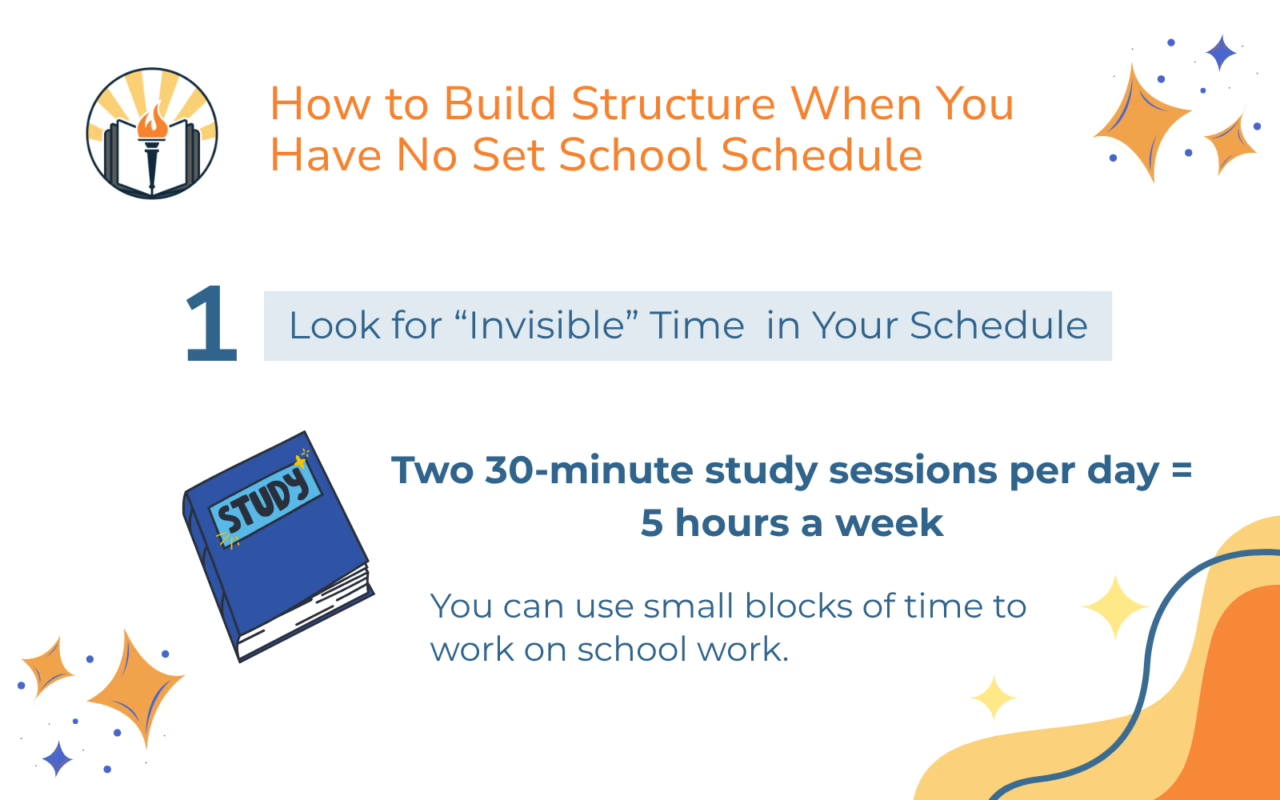
If you study for two 30-minute sessions each day, that adds up to five hours a week. This steady progress moves you closer to your diploma without needing to give up your whole evening.
2. Anchor School to Your Existing Habits
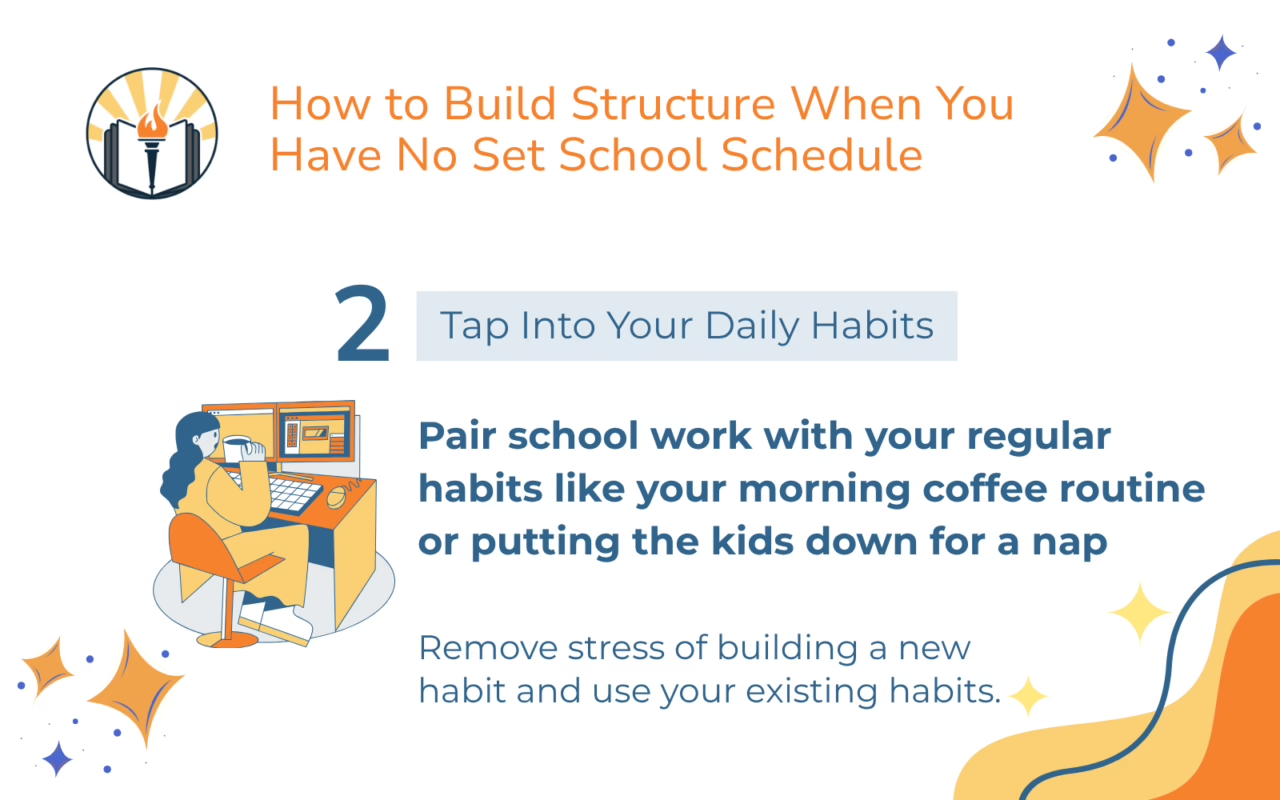
Starting a new habit takes effort, especially when you’re already tired. One way to make studying easier is to connect it to something you already do every day, so it becomes part of your routine.
Try pairing your schoolwork with a daily anchor:
- “After I pour my morning coffee, I will review one lesson outline.”
- “While my kids sit down to do their homework, I will sit with them and complete my assignments.”
- “Right after I put the kids to bed, I will log in for 30 minutes before turning on the TV.”
Connecting your schoolwork to a daily habit removes the stress of deciding when or if you’ll study each day.
3. Treat Study Time Like an Appointment
If you wait for free time to do your schoolwork, it probably won’t happen. Everyday tasks and tiredness tend to fill up any open moments.
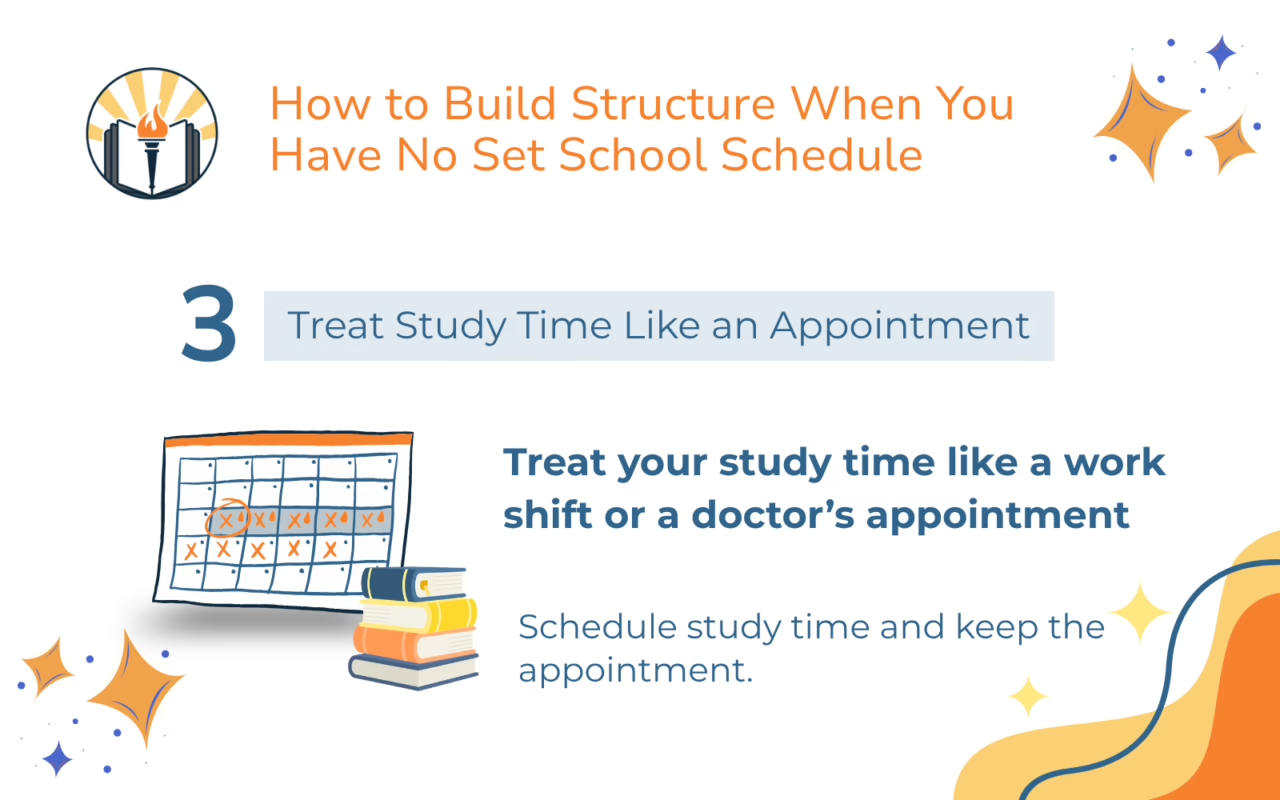
Instead, treat your study time like you would a work shift or a doctor’s appointment. Put it on your calendar and set aside specific, realistic times each week, such as Tuesdays and Thursdays from 7:00 to 8:00 PM, and Saturday mornings from 9:00 to 10:30 AM.
When it’s time to study, stick to it. If something urgent comes up, don’t give up on your goal. Just move your study time to another day, like you would reschedule an appointment.
4. Focus on Reaching Micro-Goals
Trying to start a full course module after a long workday can feel like too much. This often leads to putting it off.
Beat procrastination by breaking your work down into micro-goals:
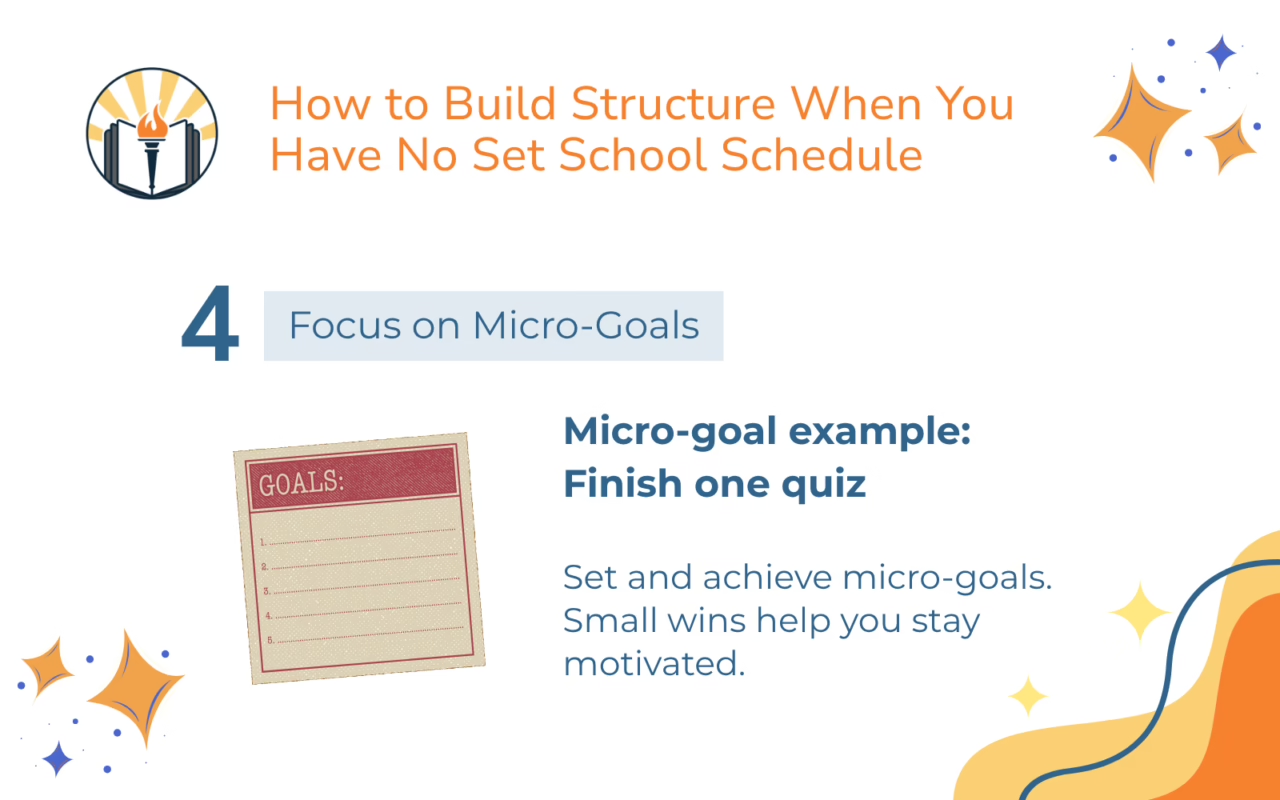
- Instead of saying “I need to study Math tonight,” aim to “Complete three practice quiz questions.”
- Instead of “Write my English essay,” set a goal to “Draft one paragraph of the outline.”
Small achievements help you keep moving forward. Once you start a small task, you may find the energy to do more. Even if you only work for 20 minutes, you’re still closer to graduation than you were before.
5. Enlist Your Support System
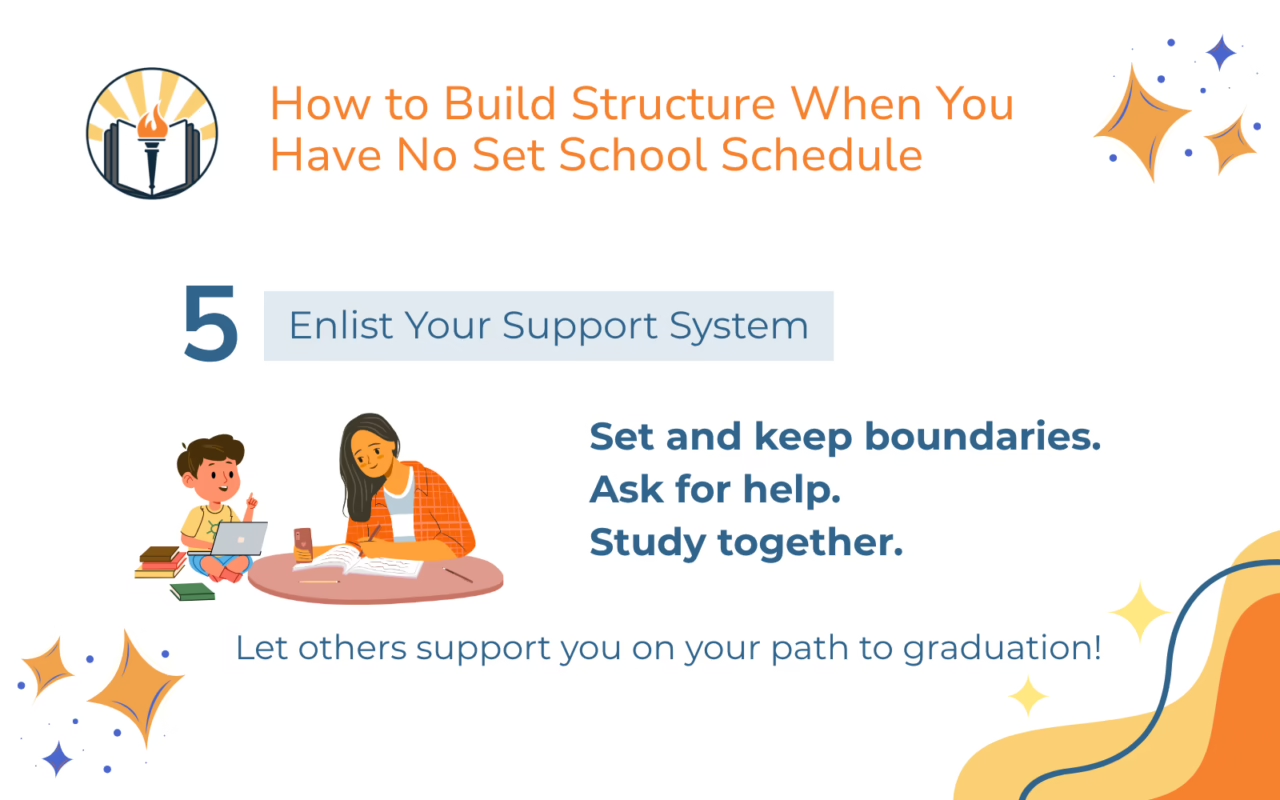
Going back to school can help your whole family, but finishing your program takes teamwork. Talk with your family, partner, and friends about your schedule and your goals so they can support you along the way.
These tips will help your support team help you reach your goals:
- Set clear boundaries and enforce them. Let your family know that when you’re in your study space with headphones on, you need time to focus without interruptions.
- Ask for specific help. For example, ask a partner or relative to handle dinner or watch the kids during your study times.
- Study together. If you have children or a partner/friend who is learning, studying together can create a positive learning environment at home.
Academic success begins at home. Allowing your circle of supporters to help you will increase your chances of success.
You Don’t Need a Fixed Schedule to Succeed
It takes courage to return to school as an adult, but you don’t need a traditional classroom to succeed. Self-paced learning gives you control. By finding small amounts of time, connecting study habits to your daily routine, and focusing on small goals, you can create a structure that fits your life.
Every small step matters, and you already have the real-life discipline needed to finish what you started.
Don’t do it alone, let Smart Schools help you finish high school. Smart Schools is a flexible online high school program for adult learners who want to finish earning their high school diploma. As an adult learner, your Smart Schools experience includes a team of supporters who want to see you succeed.

Want to Find Out More?
Find out how Smart Schools can help you accomplish your goal with tutoring, academic advising, and flexible learning options. Contact Smart Schools at 844-467-5278 or contact us here.