Program Information
Is It Worth It to Get a GED?

Read time: 6 minutes
In the United States, the GED (General Educational Development) certificate is designed to serve as an equivalent to a traditional high school diploma. While it provides an alternative pathway for individuals who were unable to complete high school, the GED is not always regarded with the same level of recognition or acceptance as a high school diploma.
For those who have left high school before graduation, pursuing a GED can be an appealing option, offering a chance to demonstrate mastery in core subject areas like language arts, social studies, and mathematical reasoning. However, some issues still exist, since some employers, colleges, and institutions may view a GED differently from a high school diploma. This disparity can sometimes impact GED recipients’ opportunities, even though the credential signifies successful completion of rigorous testing in key academic areas. Despite these challenges, earning a GED remains a valuable step for many on their educational journey, opening doors to higher education, better earning potential, and career advancement.
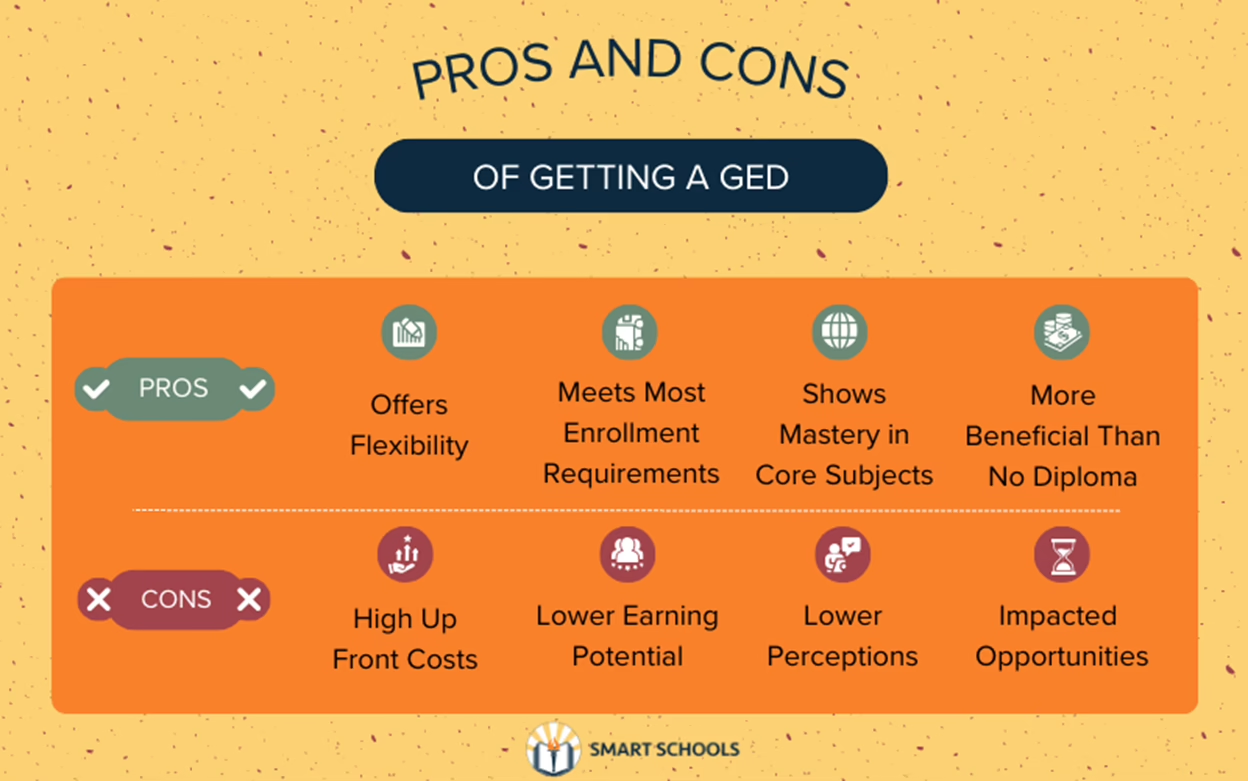
Benefits and Drawbacks of a GED
The GED Testing Service provides test takers with the flexibility to prepare at their own pace, allowing them to study independently and take the exam when they feel ready. For individuals who excel at self-directed learning, this can be a straightforward way to earn a high school equivalency credential. Additionally, a GED can meet the enrollment requirements for many colleges, trade schools, and degree programs, helping individuals take the next step in their educational journey.
However, prospective GED candidates should carefully consider the broader implications of pursuing a GED instead of a traditional high school diploma. While the GED can open doors to higher education and career opportunities, it’s important to understand potential challenges, such as differing perceptions among employers or institutions and the need to demonstrate comparable academic qualifications. Being informed about these realities ensures that test takers can make the best decision for their long-term goals.

High School as Preparation for the Future
For many individuals, high school serves as a crucial stepping stone, providing essential preparation before entering the workforce or pursuing higher education. By fully engaging in the opportunities high school offers, students can build a solid foundation for their future, whether that includes college, a trade program, or a direct career path.
The primary goal of high school is to equip students with the foundational knowledge and skills needed for success in both academic and adult life. From mastering core subject areas to developing time management through what may feel like endless homework, these experiences are designed to prepare students for the challenges ahead. Embracing these responsibilities early on helps set the stage for long-term success and builds habits essential for achieving future goals.
Balancing schoolwork with outside commitments can feel overwhelming at first. You may experience late nights or weekends dedicated to studying and completing assignments. However, with dedication and perseverance, you’ll develop effective strategies to manage these challenges. When working towards high school graduation, this process builds valuable skills. It not only prepares you for the demands of community college or state college but also equips you for careers with greater earning potential. Learning to manage responsibilities under pressure is a critical step toward achieving your goals and reaching success, whether measured by high test scores or long-term academic and professional accomplishments.

Actual Costs of Getting a GED
Obtaining a GED does come with some financial costs that test takers should consider. To begin, there is a $6.99 fee for each of the four practice tests, providing valuable preparation for the official exam. The GED test itself costs approximately $200, though these fees vary by state. The exam is divided into four subject areas:
- Mathematical Reasoning
- Reasoning Through Language Arts
- Social Studies
- Science
In certain states, additional requirements may apply. For example, in Arizona, test takers must also pass the Arizona Civics Test, which costs an additional $35. Being aware of these costs upfront helps candidates plan and budget for their GED journey effectively.
If you feel you need additional support while preparing for the GED exam, local adult education centers often offer classes to help. For those who don’t have access to a nearby center, the GED Testing Service provides an online preparation program called GED+. This service costs $449 for all subjects or $139 for a single subject, offering a flexible and convenient way to study. While it does require an investment, GED+ can be a valuable resource to help you gain the skills and confidence needed to successfully pass the GED exam.

Lower Earning Potential
One of the most challenging aspects of earning a GED is that, while it is technically considered equivalent to a high school diploma, it is not always viewed the same way by all employers or institutions. For instance, the military classifies GED recipients as tier-two recruits, which can impact their eligibility for certain roles or opportunities. This distinction highlights the importance of understanding how a GED might be perceived in specific contexts and planning accordingly to achieve your career and educational goals.
While earning a GED is undoubtedly better than not having a high school diploma at all, it may still lead to lower earnings compared to high school graduates. According to U.S. Census data, individuals with a high school diploma earn an average monthly income of $4,700, while those with a GED certificate earn approximately $3,100 per month. This translates to a significant annual difference of $19,000, highlighting the financial impact that educational credentials can have over time. Understanding these differences can help individuals make informed decisions about their educational paths and long-term goals.

Let Smart Schools Guide Your Future
This information is not meant to discourage anyone from pursuing a GED. For many individuals, it can be a necessary and practical option based on their unique circumstances. However, it’s essential to understand all aspects involved—from costs to potential outcomes—so you can make a well-informed decision that aligns with your goals and needs.
If earning a high school diploma is your goal, Smart Schools provides an excellent opportunity for individuals of any age to achieve it. Their program is designed to give those 11 and up a second chance to complete their middle school and high school education. With Smart Schools, you can study online at your own pace, making it easy to fit learning into your schedule. Plus, support is readily available whenever you need it, ensuring you have the resources to succeed.

Ready to Get Started?
With an affordable and highly flexible online high school program, you can continue your education from anywhere, on a schedule that works for you. Take the first step toward achieving your educational goals!
Resources:
GED Students Have Lower Earnings, Are Less Likely to Enter College | US Census