Career Readiness
Can a GED Get You a Good Job? Surprising Ways the GED Affects Your Job Opportunities

Read time: 5 minutes
For millions of people in the United States, the GED test has been a stepping stone to regaining a high school education and achieving better job opportunities. With a dropout rate of 5.3%, many rely on the GED program to earn a high school equivalency and move forward with their career goals. But how does earning a GED certificate impact employment opportunities and financial stability?
While the GED program offers a second chance, it’s important to understand its perceptions in the workforce. In this article, we’ll explore how the GED affects employment goals and annual salary expectations, and share ways to overcome the challenges associated with earning a GED.
Understanding the GED: A Second Chance at Education
The GED test is designed to measure the same basic skills as a high school education, covering areas like language arts, social studies, mathematical reasoning, and science. Completing the GED certificate demonstrates mastery of essential knowledge needed for many job training programs and entry-level roles.
However, studies show that GED holders, on average, earn less than those with a high school diploma. According to the U.S. Census, GED holders may face challenges in career advancement, with median salaries often trailing those of diploma holders. Why? It often comes down to perception.
Why Perception Matters in Employment Opportunities
Even though GED recipients possess comparable knowledge to high school graduates, employers sometimes view GED holders differently. These perceptions can impact employment opportunities, particularly in industries requiring advanced communication skills, computer skills, or specialized job training.
Angela Chicci, a school counselor at Smart Schools, explains: “The military looks more highly on recruits with a high school diploma. Those with a GED certificate must score higher on the ASVAB than those with a diploma.”
GED holders may also need to combat stereotypes about their work experience or determination. Employers sometimes associate GEDs with a lack of discipline or commitment, which can create hurdles during the job search process.

How to Overcome GED Perceptions and Build Financial Stability
The key to overcoming the stigma associated with a GED lies in demonstrating your commitment to learning and personal growth. Here are two effective strategies:
1. Pursue Higher Education or a Training Program
Earning a college degree or completing a specialized training program can help shift employer perceptions. Programs in fields like HVAC technician training, graphic design, or customer service emphasize new skills and build on the GED’s foundation. College education also boosts earning potential and opens doors to higher-paying roles with an average annual salary above entry-level positions.
2. Complete a High School Diploma Program
For those who want to further enhance employment opportunities, returning to earn a high school diploma can be a game-changer. Smart Schools offers accredited programs tailored to individuals’ needs, allowing them to finish their high school education while working toward career goals.

The Truth About GEDs and Employment Goals
A GED certificate won’t prevent you from finding a job, but it may limit some opportunities compared to a high school diploma. Many employers, especially those seeking candidates with strong communication skills or entrepreneurial spirit, favor diploma holders.
However, GED holders can still achieve success with determination and the right resources. By building new skills through college education, job corps programs, or vocational training, GED recipients can improve their average salary and secure a better job aligned with their employment goals. Plus, the option for a high school diploma is always open.
A Better Future Starts Here
Whether your goal is to become a shuttle driver, HVAC technician, or graphic designer—or even start your own business—earning a GED is an important first step. It’s not just about meeting the basic skills needed for a job but about building a foundation for long-term success and financial stability. Taking this step shows employers and family members alike that you’re committed to your career goals and ready to work toward a brighter future.
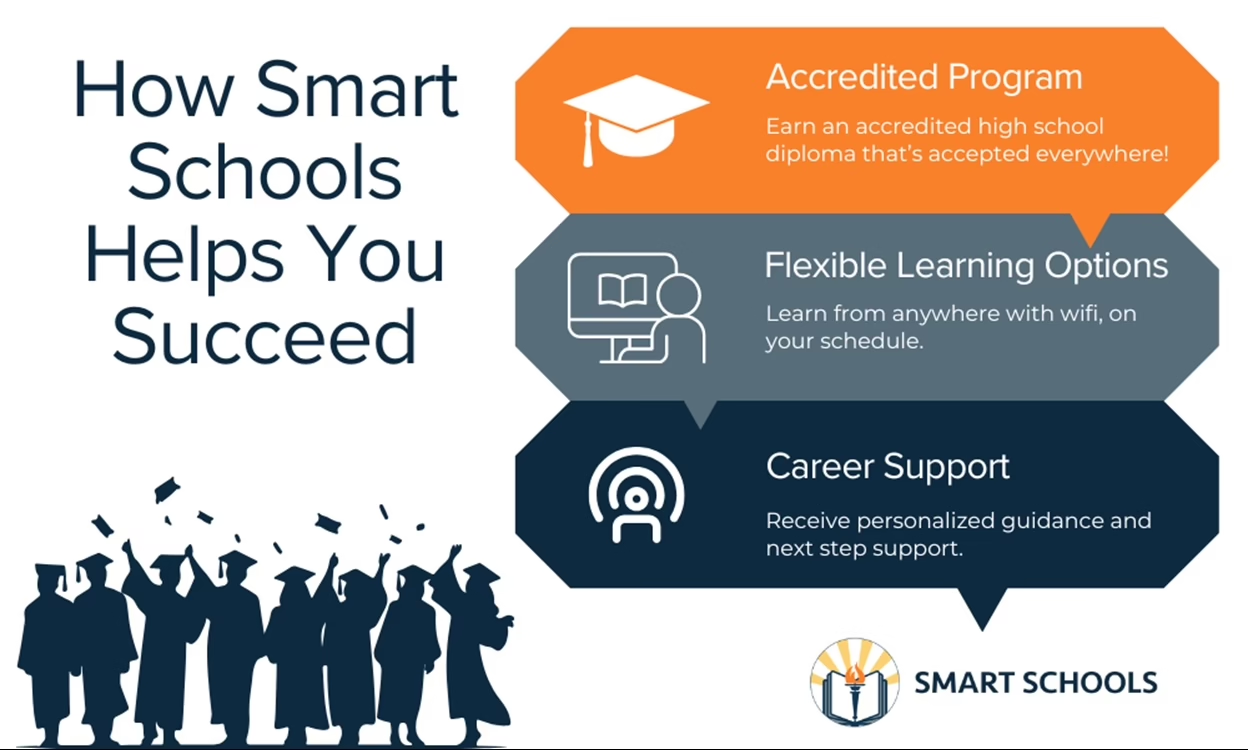
For those ready to take their career to the next level, Smart Schools provides a flexible, accredited high school diploma program designed to fit your lifestyle and support your aspirations. With the tools and support you need, you can gain the confidence and qualifications to take on new challenges, whether that means pursuing a college degree, joining a training program, or achieving employment goals in a competitive job market.
Don’t let the past define your future. With Smart Schools, you can recover what was lost—a high school education—and set yourself up for lifelong success, opening doors to better job opportunities, a higher average salary, and the ability to achieve your dreams.
Take the first step toward a brighter future—enroll with Smart Schools today and start building the life you deserve!

How to Get Started
Find out how Smart Schools can help you accomplish your goal with free tutoring, academic advising, and flexible learning options. You can achieve your dreams and build a brighter future with the proper support.
Sources
Can You Join the Military With a GED?
GED Recipients Have Lower Earnings, are Less Likely to Enter College
GED vs. High School Diploma: What’s the Difference?